Cherry blossom 2027 books early — start now
Leave your details and a travel designer will call within 24 hours to shape your Japan journey, from Kyoto ryokans to private temple mornings.
Japan's Ancient
Imperial Capital
Luxury travel in Kyoto is about timing and access more than thread counts. We plan at least four nights, split between the old lanes of Higashiyama and the river at Arashiyama, with Fushimi Inari and the bamboo grove at dawn before the crowds, a night or two in a ryokan such as Hiiragiya with kaiseki served in your room, and gardens and tea ceremonies booked privately weeks ahead.
From India, the easiest route is a nonstop flight from Delhi or Mumbai to Tokyo, then the shinkansen to Kyoto in about two hours and fifteen minutes. Go in late March to early April for cherry blossom or mid-November for autumn colour, and book both seasons well ahead.
Your Kyoto Journey
A starting point, not a template — every day is shaped around you.
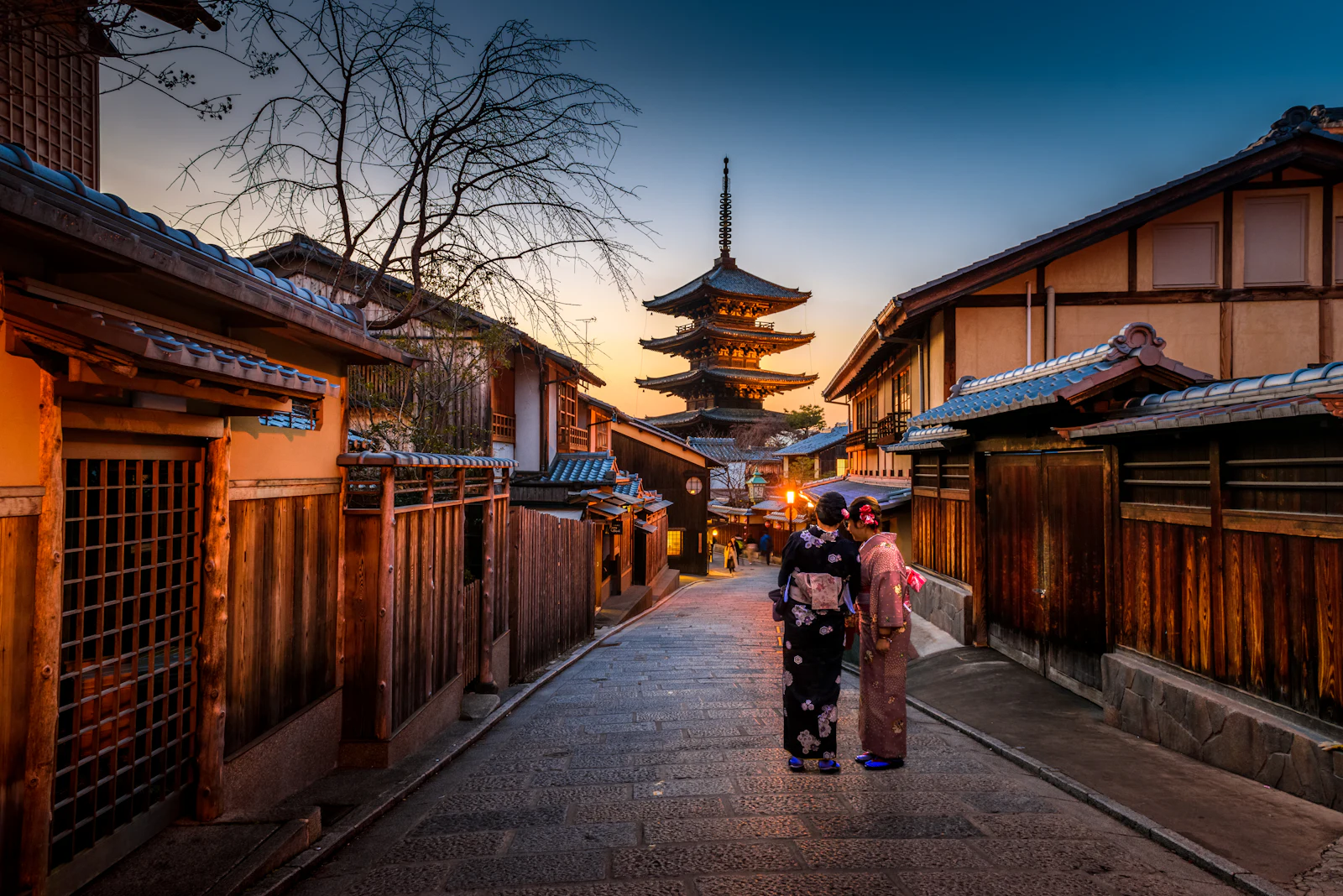
Arrive in Kyoto and transfer to your private ryokan in Higashiyama. Evening stroll along Gion's lantern-lit public streets — its private lanes have been closed to visitors since 2024. Traditional kaiseki dinner with seasonal ingredients.
Dawn walk through the 10,000 vermillion torii gates of Fushimi Inari before the crowds arrive. Afternoon private tea ceremony lesson with a tea master in an 18th-century machiya townhouse in Nishiki.
Arashiyama's bamboo grove on foot at sunrise, before the crowds. Visit the zen garden of Tenryu-ji Temple. Afternoon boat ride on the Hozu River through ancient cedar forests.
Day trip to Nara, where over 1,000 sacred deer roam freely among 8th-century temples. Private guide to the enormous bronze Buddha at Tōdai-ji. Return to Kyoto for a geisha performance dinner.
Morning exploration of the Nishiki covered market — the kitchen of Kyoto. Hands-on cooking class preparing traditional Japanese dishes. Final evening with a private sake tasting at a 300-year-old brewery.
Curated Properties
Begin Your Kyoto
Experience
ENQUIRE NOWKyoto keeps early hours
Kyoto rewards the traveller who gets up early and the one who books ahead. Everything else is a queue. Fushimi Inari at six in the morning is a mountain shrine; at ten it is a crowd moving uphill. The Arashiyama bamboo grove before eight is quiet enough to hear the stems knock together. We plan Kyoto around those hours, and keep the middle of the day for a long lunch, a tea house or the hotel garden.
The classic mistake is the day trip. Travellers base themselves in Osaka or Tokyo and give Kyoto a single afternoon, which is the worst possible hour in the most visited city in Japan. Kyoto needs four nights, ideally split between two very different places: the old lanes of Higashiyama, where you can walk to temples before breakfast, and the river at Arashiyama, where the evenings are almost rural. The second mistake is treating Gion as a sight. Its private lanes have been closed to tourists since April 2024. The right way into that world is an introduction.
Kyoto suits couples who want the most refined city in Asia, grandparents who love gardens and craft, and older children curious about samurai, trains and ninja. It is less suited to toddlers, because temples mean steps, gravel paths and silence. For everyone, the reward is access we arrange ahead: the moss garden at Saiho-ji, which takes visitors only by advance reservation, the Katsura Imperial Villa by booked tour, and a kaiseki counter of eight seats.
Journeys we design around Kyoto
Kyoto in Depth — 6 Nights
Higashiyama, Kyoto (4) → Arashiyama, Kyoto (2)
For travellers who have seen Tokyo and want Kyoto properly. Nara and the tea fields of Uji as unhurried mornings, then two slow nights by the Oi River to finish.
Kyoto Honeymoon — 9 Nights
Tokyo (3) → Kyoto, Park Hyatt (3) → Arashiyama, Hoshinoya Kyoto (3)
Neon first, then the old city at dawn, and the boat to Hoshinoya last. We put the quietest place at the end so the journey ends slower than it began.
Kyoto with Family — 7 Nights
Kyoto (4) → Osaka (3)
For children and grandparents together. The Kyoto Railway Museum, Nara's deer, a samurai sword lesson, then Osaka for street food and Universal Studios Japan with Express Passes booked months out.
Hotels we trust in Kyoto
Hoshinoya Kyoto
Twenty-five rooms on the far bank of the Oi River, reached by a fifteen-minute boat ride from beside the Togetsukyo Bridge. Every room looks onto the river and Mount Ogura. Once the day visitors leave Arashiyama, the hotel has the valley almost to itself. Best for couples and adults.
Hiiragiya
A ryokan since 1818, among the oldest in the city, a short walk from Tawaraya across the lane. Twenty-eight rooms, the older ones in the original wooden building and a newer wing of tatami suites. Kaiseki is served in your room. It is the ryokan we choose when Tawaraya is full, and some clients prefer it.
Park Hyatt Kyoto
Seventy rooms on the slope below Kodai-ji, one of the smallest Park Hyatts in the world, with picture windows framing the Yasaka pagoda. Step out of the gate and you are on the stone lanes of Ninenzaka before the shops open. It is the best base we know for Kyoto at dawn.
Hotel The Mitsui Kyoto
Built on the site of a Mitsui family residence, entered through a gate more than three hundred years old. The hot spring water rises from about 1,000 metres beneath the hotel, and two suites have their own outdoor onsen baths. Central, calm and very good for families who want space.
Four Seasons Hotel Kyoto
Built around Shakusui-en, a pond garden dating back some eight hundred years, with koi, herons and a stone bridge between two ponds. Tea on the terrace of the Fuju lounge is the calmest hour in eastern Kyoto. Its size, its pool and its quiet garden make it one of the easiest Kyoto stays for families.
Planning Kyoto from India
Flights from India
There is no nonstop flight from India to Kansai, the airport for Kyoto. The easiest route is a nonstop from Delhi or Mumbai to Tokyo, a little over seven hours from Delhi, then the shinkansen to Kyoto. From South India we usually connect through Singapore into Kansai. Where we can, we fly into Tokyo and home from Kansai, so the journey runs in one direction.
Getting there
From Tokyo, the Nozomi shinkansen reaches Kyoto in about two hours and fifteen minutes, and luggage goes ahead by overnight courier. From Kansai Airport, the Haruka express takes about seventy-five minutes to Kyoto Station, though we usually send a private car to the hotel door. Within Kyoto, buses are crowded; we use private cars and walk the old lanes.
Best time to go
Late March to early April for cherry blossom, and mid-November to early December for autumn colour, Kyoto's most beautiful and most booked fortnights. May and October are our favourite quiet months. July brings the Gion Matsuri, with grand processions on the 17th and 24th, in real heat. Avoid Golden Week in late April and early May, and the Obon holidays in mid-August.
Vegetarian & Jain food
Kyoto is the best city in Japan for vegetarians, because it is the home of shojin ryori, Buddhist temple cooking without meat or fish. Shigetsu, inside Tenryu-ji in Arashiyama, is our first booking, and we confirm with every temple kitchen that no fish stock is used. Elsewhere, fish stock hides in almost everything, so kaiseki kitchens are briefed weeks ahead with a Japanese dietary card. Jain meals need the earliest notice of all.
With children and grandparents
Older children love the Kyoto Railway Museum, the deer at Nara and a sword or ninja lesson. For grandparents, temples mean steps and gravel paths, so we choose gardens that can be enjoyed seated, use private cars rather than buses, and book hotels with beds rather than futons. Two Kyoto temples a day is plenty; one is often better.
Experiences in Kyoto
A Japan honeymoon, designed for two
Tokyo, Mount Fuji and Kyoto, then a traditional inn with its own hot-spring bath.
Questions, Answered
When is the best time to visit Kyoto?
The best time to visit Kyoto is late March to early April for cherry blossom and November for autumn foliage. These peak seasons are spectacular but busy; May and early autumn offer mild weather with fewer crowds.
What is Kyoto known for?
Kyoto, Japan's former imperial capital, is known for over 1,600 Buddhist temples and Shinto shrines, Zen gardens, the geisha districts of Gion, kaiseki cuisine and traditional ryokan inns.
How do I arrange private cultural access in Kyoto?
The Luxe Trails arranges private tea ceremonies, after-hours temple visits, meetings with artisans and master chefs, and stays in exclusive ryokan — experiences rarely open to independent travellers.
How many days do you need in Kyoto?
Four nights is right for a first visit, enough for Higashiyama, Arashiyama, Fushimi Inari at dawn and a morning in Nara. Six nights allows Uji, a tea ceremony, a garden by reservation and slower days. A single day trip from Osaka or Tokyo shows you Kyoto at its most crowded and is the one plan we talk clients out of.
How do we travel to Kyoto from India?
Fly nonstop from Delhi or Mumbai to Tokyo, then take the shinkansen to Kyoto in about two hours and fifteen minutes. Alternatively, connect through Singapore or another Asian hub to Kansai Airport, about seventy-five minutes from Kyoto by express train or a little longer by private car. We often fly in to Tokyo and home from Kansai.
Should we stay in a ryokan or a hotel in Kyoto?
Both, if the trip allows. One or two nights in a ryokan such as Hiiragiya or Tawaraya, with kaiseki in your room, is the most Kyoto experience there is. For longer stays, a hotel like the Park Hyatt or Four Seasons gives beds, space and a pool. Families with grandparents usually prefer hotels, or a ryokan with western beds.
Is Kyoto good for a honeymoon?
It is one of the most romantic cities we plan. Arrive by boat at Hoshinoya Kyoto, walk Ninenzaka before the shops open, take a private tea ceremony and a kaiseki counter of eight seats. We pair Kyoto with Tokyo first and keep the quietest nights for last. Spring and autumn are the loveliest seasons.