Tell us when — we'll design the rest
Leave your details and a travel designer will call within 24 hours. We do the research, you choose — no packages, no long forms.
Africa's Greatest
Wildlife Spectacle
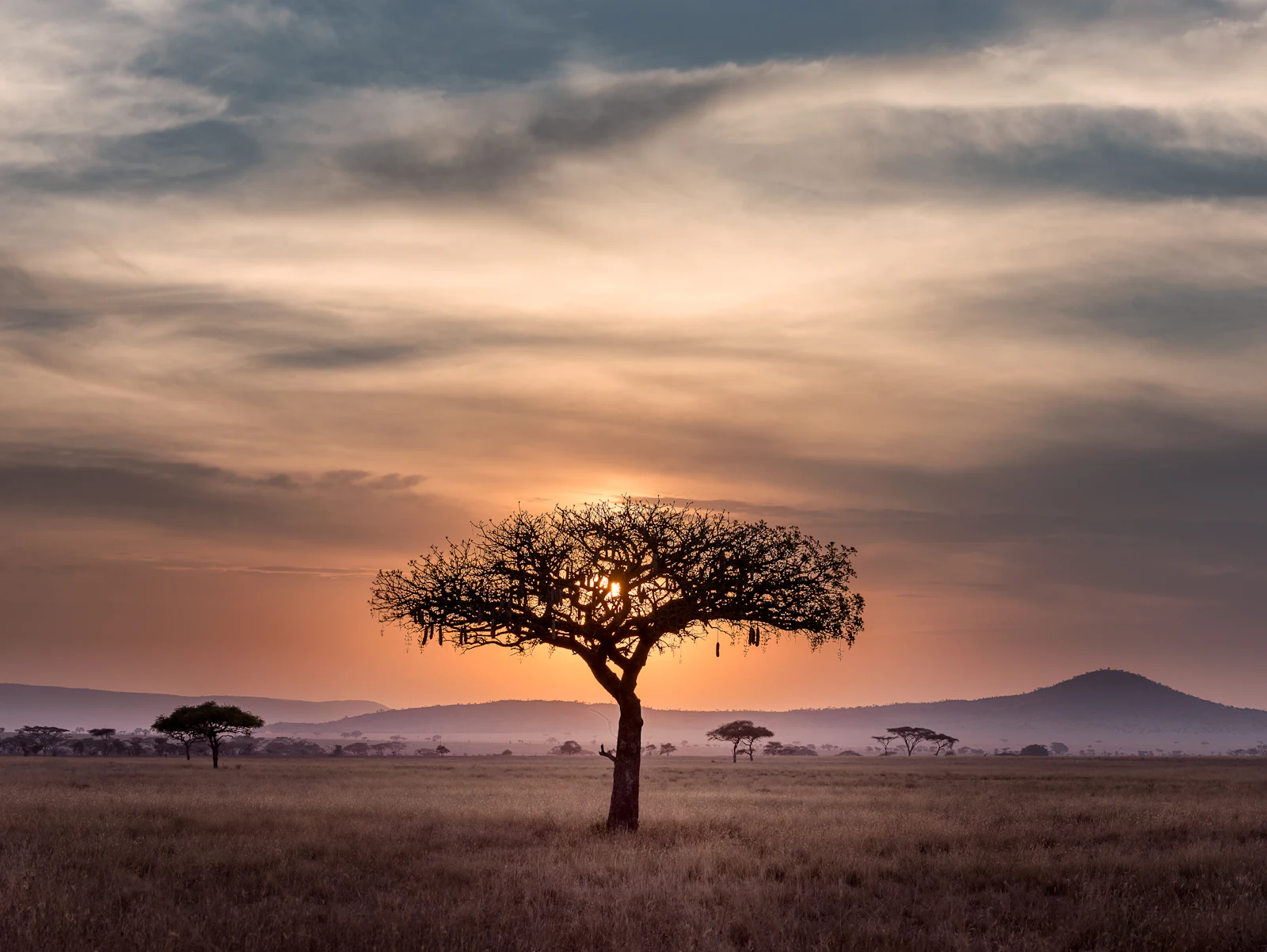
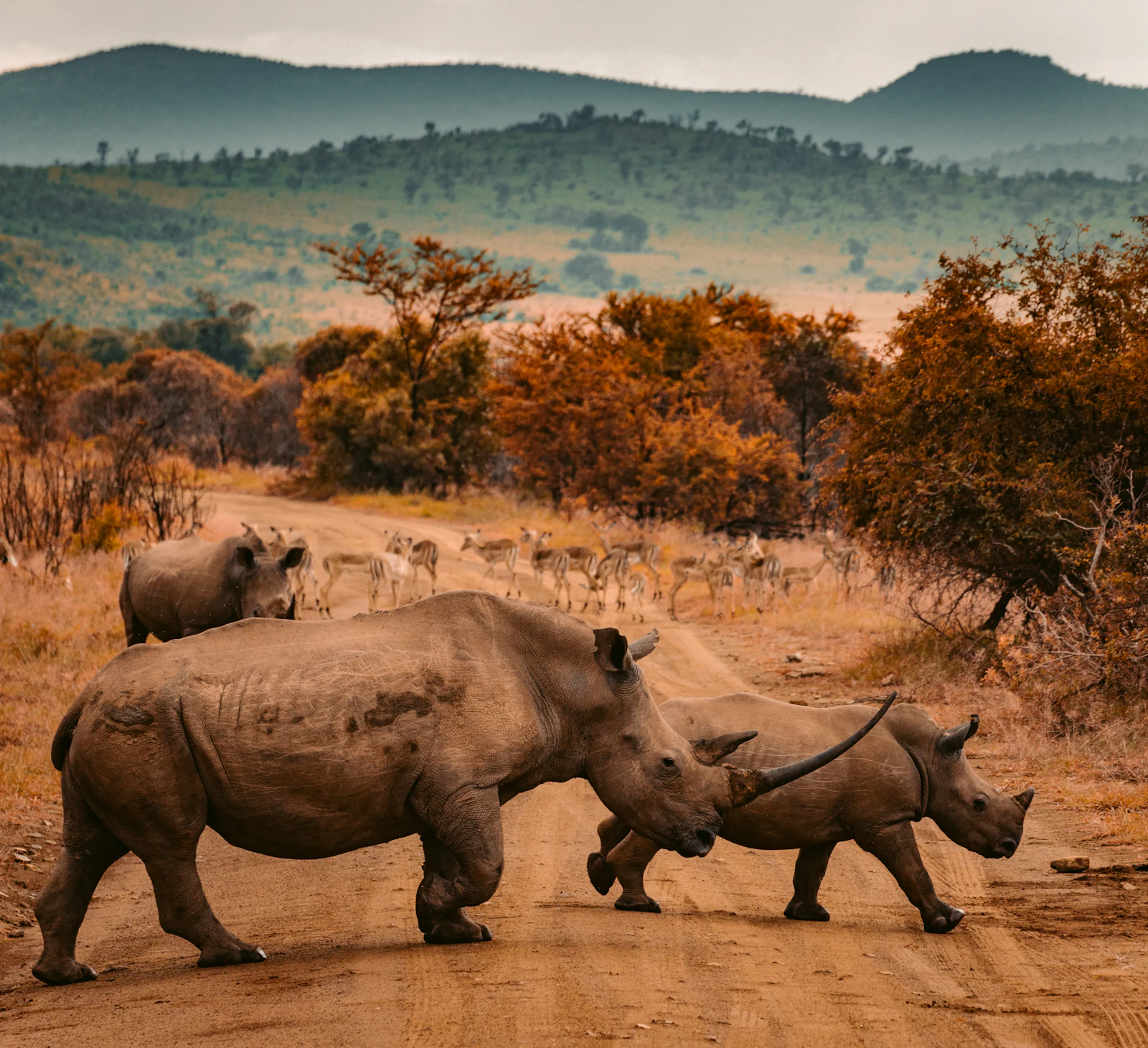
The Serengeti is the earth's greatest stage — 30,000 square kilometres of endless savanna where the drama of life and death plays out in real time. It is home to the world's largest terrestrial migration: 1.5 million wildebeest, 200,000 zebra and 500,000 gazelle moving in an eternal circle of life.
The Luxe Trails places you at the very heart of this natural wonder — in intimate tented camps that put you inside the action, with expert guides who know these plains like the back of their hand.
Your Serengeti Safari
A starting point, not a template — every day is shaped around you.
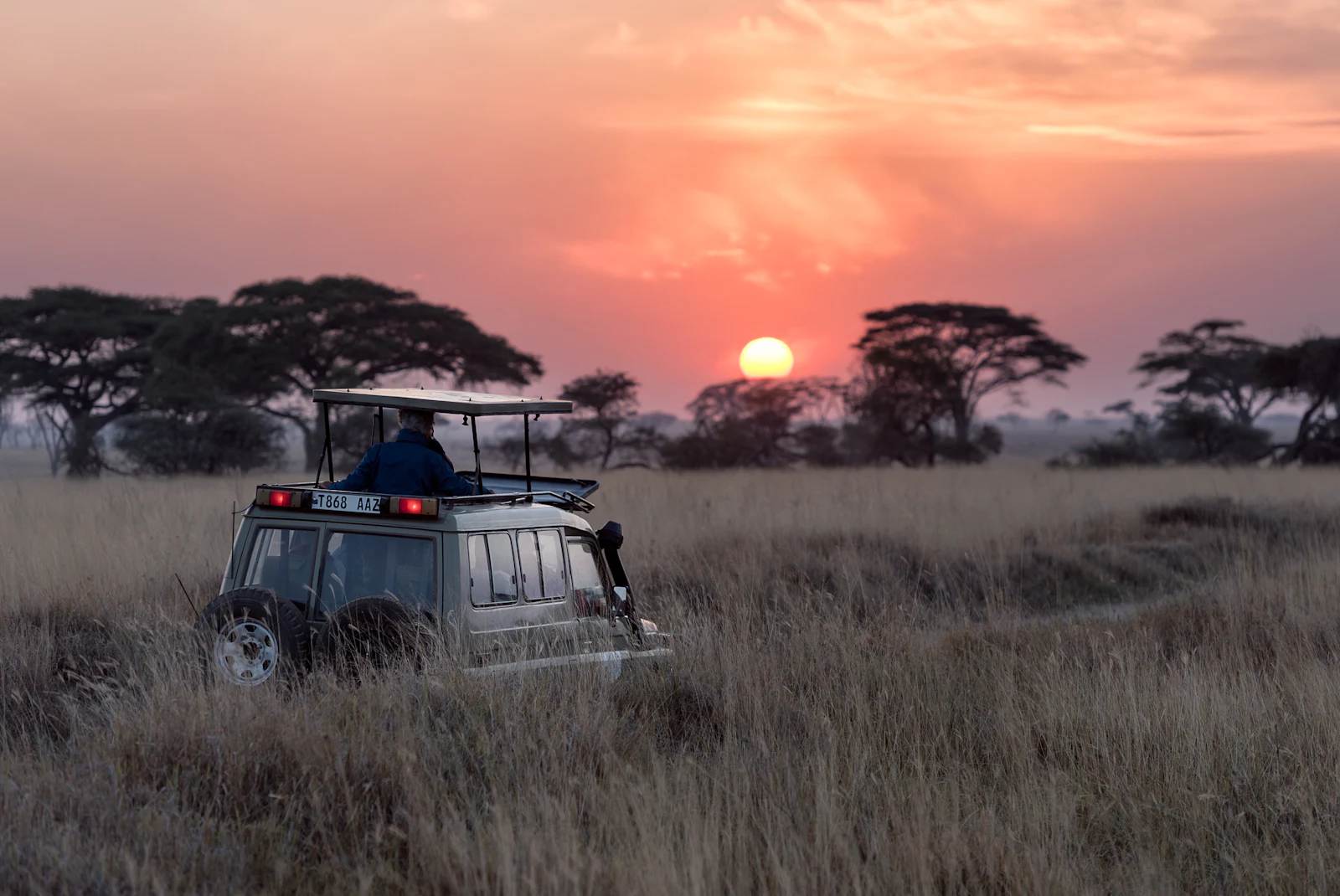
Arrive at Kilimanjaro International Airport and fly by private charter to your exclusive tented camp on the edge of the Serengeti. Afternoon game drive with your personal guide and tracker.
Full-day safari following the wildebeest migration — over 1.5 million animals moving in an ancient cycle across the plains. Sundowner cocktails at a secret kopje (rock outcrop) at golden hour.
Pre-dawn hot air balloon flight over the Serengeti at sunrise, floating silently above lion prides and elephant herds. Land to find a champagne breakfast laid out on the savanna floor.
Drive to the Ngorongoro Crater — the world's largest intact volcanic caldera, home to one of Africa's richest concentrations of big game. Picnic lunch on the crater floor surrounded by big game.
Visit a traditional Maasai boma and learn about the ancient culture and warrior traditions from community elders. Evening sundowners — and, where we stay in a private concession such as Grumeti, a night drive by spotlight (not permitted inside the national park).
Last dawn game drive through golden grasslands. Farewell brunch at camp before your charter flight back to Kilimanjaro.
Curated Properties
Begin Your Serengeti
Journey
ENQUIRE NOWFollow the herds, not the brochure
The Serengeti is not one safari. It is a dozen, depending on the month. The herds spend January and February calving on the short-grass plains around Ndutu, push west through the Grumeti country around June, and reach the Mara River in the far north from July to October. A camp that is perfect in August can be empty plains in March. Our first question is never which lodge. It is which month, and then where the wildebeest will be.
The classic mistake is the circuit. Most first safaris drive Arusha to Tarangire to Ngorongoro to the Serengeti and back, and spend a third of the trip on corrugated roads. We fly. Light aircraft land at bush airstrips close to camp, so the hours go to the animals rather than the dashboard. The second mistake is too many camps. Three nights in one place lets a guide learn what you want to see. One night anywhere is a transfer, not a safari.
It suits more travellers than people expect. Couples who want the drama of a river crossing and then four days of nothing on a Zanzibar beach. Families with children of seven and over, who can fly in a balloon at dawn. Grandparents, provided we keep the drives to mornings and evenings and choose camps with proper beds, hot water and paths you can walk at night. The one traveller it does not suit is the one in a hurry.
Journeys we design in the Serengeti
First Safari — 8 Nights
Karatu, Gibb's Farm (2) → Eastern Serengeti, Namiri Plains (3) → Northern Serengeti, Lamai (3)
For a first safari between July and October. The Ngorongoro Crater as a long day from the coffee farm, the big cats of the east, then the Mara River crossings from a camp near Kogatende.
Safari Honeymoon & Zanzibar — 10 Nights
Ngorongoro Highlands (2) → Serengeti (4) → Mnemba Island, Zanzibar (4)
Cold mornings above the crater, four nights following the herds, then a light-aircraft flight to the coast. We put the beach last so the journey ends slower than it began.
Family Safari — 8 Nights
Karatu, Gibb's Farm (2) → Central Serengeti, Four Seasons Safari Lodge (3) → Singita Grumeti (3)
For children and grandparents together. A lodge with a pool and a kids' programme first, then the private Grumeti concession, where walking safaris and night drives are permitted, unlike inside the national park.
Hotels we trust in the Serengeti
Namiri Plains
Ten tented suites and one family suite on plains that were closed to tourism for years as a cheetah research area. The result is big-cat country with very few vehicles. Asilia can arrange an evening with the Serengeti Cheetah Project researchers. This is where we send travellers who care more about lion and cheetah than about the river.
The Highlands
Eight domed suites of canvas and perspex on the slopes of Olmoti volcano, higher than any other camp in the area. Each has a wood-burning stove, and you will use it. It is a short drive to the crater rim, and the best place we know to walk with Maasai guides in the highlands.
Gibb's Farm
A working coffee estate from the 1920s, with cottages among the roses and bougainvillea and most of the food grown in its own organic garden. It is the gentlest start to a safari we know: a night to recover from the flight, a farm walk, and the crater an hour away. Vegetarian travellers eat very well here.
Four Seasons Safari Lodge Serengeti
The family answer. An infinity pool beside a waterhole that elephants visit, a Discovery Centre that tracks animal movement across the ecosystem, and a kids' club with Maasai beadwork and camera traps. It is a lodge rather than a camp, which is exactly what grandparents and young children often need.
&Beyond Mnemba Island
Twelve beach bandas on a private island inside a marine reserve. Shoes optional, no cars, a reef a few strokes from the sand. After four days of dawn starts in the Serengeti, it is the right way to finish. Book it at the same time as the safari; it fills early.
Planning the Serengeti from India
Flights from India
Mumbai is the easiest start. Air Tanzania now flies nonstop between Mumbai and Dar es Salaam daily, and Kenya Airways and IndiGo fly nonstop Mumbai to Nairobi in a little over six hours, with a short connection on to Kilimanjaro. From Delhi, Bengaluru and other cities we usually route through Nairobi, Addis Ababa on Ethiopian, or Doha on Qatar Airways into Kilimanjaro. The time difference is only two and a half hours.
Getting there
Kilimanjaro or Arusha is the gateway. From there, scheduled light aircraft fly to Serengeti airstrips, often with a stop at another strip on the way north. Bags travel in soft duffels with a strict weight limit, usually 15 kilograms each including hand luggage, so we send a packing list early. Ngorongoro and Karatu are by road from Arusha, about three hours.
Best time to go
January and February for the calving around Ndutu, when predators follow the newborns. June for the herds in the western Grumeti country. July to October for the Mara River crossings in the north, the busiest and most booked season. Avoid April and May: the long rains turn roads to mud and many seasonal camps close entirely.
Vegetarian & Jain food
Easier than most travellers fear. Arusha has a long-established Indian community, safari kitchens are used to vegetarian guests, and camps cook dal, curries and fresh chapati when briefed in advance. Jain meals need the most notice, because supplies are flown or driven in days ahead. We send every camp a written dietary brief at booking, not on arrival.
With children and grandparents
Most balloon operators fly children from seven, and some camps set minimum ages for walking safaris, so we match the camp to the youngest traveller. Family tents and private vehicles mean nobody waits for strangers. For grandparents we keep drives to the cool hours, fly rather than drive between regions, and avoid camps with long, unlit walks to the tent. Ngorongoro's rim sits above 2,200 metres, so we pack warm layers.
A Masai Mara honeymoon, designed for two
The Masai Mara and the Great Migration, a dawn balloon, then a private conservancy.
Questions, Answered
When is the best time to see the Great Migration in the Serengeti?
The Great Migration moves year-round, the Grumeti crossings come around June and the Mara River crossings from July to October, while the calving season runs January to February in the southern Serengeti. Your ideal timing depends on which spectacle you wish to witness.
What is the Serengeti known for?
The Serengeti is known for the annual Great Migration of over a million wildebeest and zebra, one of Africa's great lion populations, endless savannah plains and exclusive private conservancies.
How do I plan a luxury Serengeti safari?
The Luxe Trails designs private safaris with dedicated guides and vehicles, exclusive-use camps, balloon safaris and bush dining — positioned to follow the wildlife at the optimal time of year.
How many days are enough for a Serengeti safari from India?
Seven to eight nights is right for a first safari: two near the Ngorongoro Crater and five or six in the Serengeti across two camps. Add three or four nights on Zanzibar for a honeymoon. Fewer than five nights on safari usually means too much time on airstrips and not enough with the animals.
How do we reach the Serengeti from India?
Fly to Kilimanjaro, usually through Nairobi on Kenya Airways or IndiGo from Mumbai, or through Addis Ababa or Doha from other Indian cities. Air Tanzania also flies nonstop from Mumbai to Dar es Salaam. From Kilimanjaro or Arusha, light aircraft fly to bush airstrips close to your camp, so there is no long drive.
Is a Serengeti safari suitable for children?
Very, from about six or seven. Children fly in hot-air balloons from seven with most operators, and lodges such as Four Seasons Safari Lodge Serengeti run children's programmes. We book family tents and a private vehicle so the day runs at your pace, and we choose camps where young children are welcome.
Should we choose the Serengeti or the Masai Mara?
They are one ecosystem divided by a border. The Mara is smaller and easier to reach from Nairobi, but at peak crossing season it can be crowded with vehicles. The Serengeti is far larger, so the same spectacle comes with more space. For a first safari between July and October we usually prefer the northern Serengeti.