
The Americas, designed around you
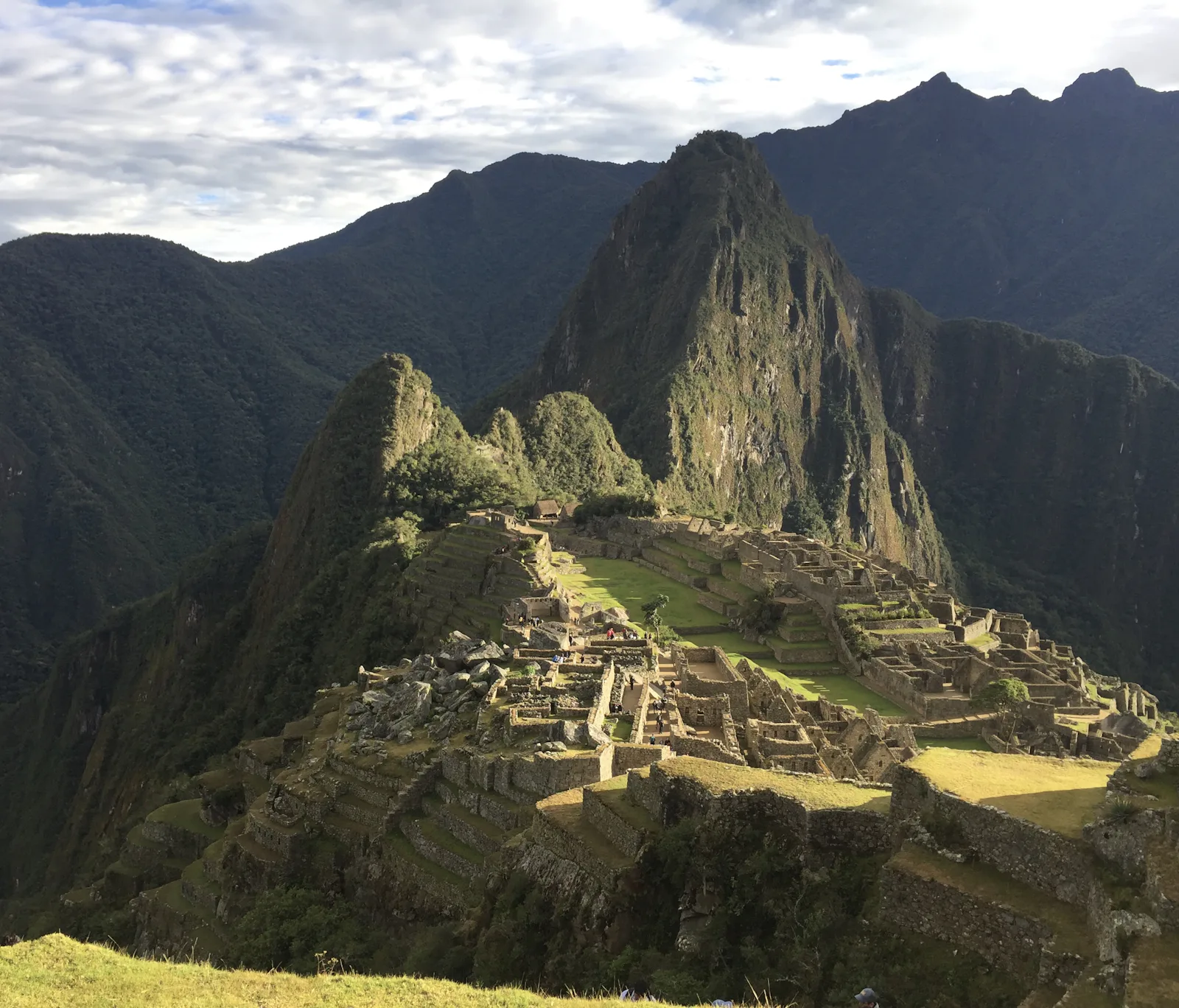
Machu Picchu before the first bus climbs the hill, a lodge on Lake Pehoé with the Paine massif across the water, a glacier breaking into a lake in Argentina. We design luxury South America journeys from India for couples, families and seasoned travellers ready for the longest trip of their lives — fewer places, longer stays, every connection handled.
Begin planningA long way, so do it once and do it properly
South America is the furthest we send anyone from India, and that distance is the argument for planning it carefully. A journey here is not a holiday you repeat next year. It is the trip people talk about for a decade, and it should be built that way: two countries, sometimes three, never five. Peru for the Inca heartland and the Andes; Chile and Argentina for Patagonia's granite towers, glaciers and wind. The best lodges in both are small, remote and booked many months ahead.
The classic mistake in Peru is altitude. Cusco sits at about 3,400 metres, and travellers who fly in from Lima and start sightseeing the same afternoon spend the next two days with headaches. We go to the Sacred Valley first, several hundred metres lower, and come up to Cusco at the end, when the body has adjusted. The classic mistake in Patagonia is rushing. Torres del Paine needs four nights, because the weather changes by the hour and the good days have to be waited for.
There are no direct flights from India to South America. The smoothest routings run through Europe, on KLM through Amsterdam or Iberia through Madrid to Lima, or through the Gulf on Qatar Airways or Emirates to São Paulo and on. Expect twenty-four to thirty hours door to door. Peru is ten and a half hours behind India, Chile and Argentina eight and a half in their summer, so we build a quiet first day and fly business class wherever we can.
Where we design journeys in Americas
Journeys we design in South America
Peru and Patagonia — 15 Nights
Lima (2) → Sacred Valley (3) → Machu Picchu (1) → Cusco (2) → Santiago (1) → Torres del Paine (4) → Santiago (2)
The great South American journey for a first visit. Peru climbs gently to altitude; Patagonia follows when the body is rested, and Santiago bookends it with wine country an hour from the city.
Patagonia Honeymoon — 10 Nights
Santiago (1) → Torres del Paine (4) → El Calafate (3) → Buenos Aires (2)
Chilean Patagonia first, then across the border by road to the Perito Moreno Glacier, and Buenos Aires last for long dinners, tango and the Recoleta. The wild half comes first; the city is the reward.
Peru with Family — 9 Nights
Lima (2) → Sacred Valley (3) → Machu Picchu (1) → Cusco (3)
For children and grandparents together. The Sacred Valley's gentler altitude first, the vista-dome train as an event, a night beside Machu Picchu, and Cusco at the end with oxygen-enriched rooms.
What we would plan for you in Americas
Machu Picchu at first entry
Sleep at the citadel's gate and walk in with the first timed entry, before the buses from Aguas Calientes reach the top. Mist lifts off Huayna Picchu, the terraces turn from grey to green, and a private archaeologist explains what you are standing on. By ten it is a different place.
The Hiram Bingham
Belmond's polished blue-and-gold train leaves Poroy, twenty minutes from Cusco, and follows the Urubamba down through the gorge. Brunch in the dining car, pisco sours in the observation car, live Andean music, and the river crashing alongside. The journey becomes the first chapter of Machu Picchu, not the commute to it.
Lunch at Mil, above Moray
Virgilio Martínez's restaurant sits at about 3,500 metres beside the circular Inca terraces of Moray, which may once have been an agricultural laboratory. The tasting menu follows Andean altitudes, from tubers and grains to mountain herbs. A walk through the terraces first; the view from the table afterwards.
Tracking pumas in Torres del Paine
Before dawn, with a tracker who knows which ridges the cats patrol. Guanacos alarm-call across the steppe, condors circle the cliffs, and sometimes a puma is simply lying in the grass a hundred metres away, watching you back. Patience is the price. We plan more than one morning.
The Perito Moreno Glacier
A wall of blue ice about sixty metres high, ending in a lake outside El Calafate. You stand on the walkways opposite and wait, and every so often a block the size of a building cracks away and falls into the water with a sound like a cannon. We go early, then by boat to the face.
Weaving in the Sacred Valley
A morning in Chinchero with a weaving cooperative, where women dye alpaca wool with cochineal, plants and minerals and weave patterns that carry the names of their villages. Children try the spindle. Adults buy a textile that is worth more than any souvenir from Cusco's markets.
Hotels in Americas we trust
Sanctuary Lodge, A Belmond Hotel
Thirty-one rooms and the only hotel at the entrance to the citadel. Its point is time: the ruins after the day visitors have gone down the mountain, and the first entry in the morning before they come back. One night is enough. We book it many months ahead.
Palacio Nazarenas, A Belmond Hotel
A former convent built on Inca foundations, two minutes from the Plaza de Armas, with fifty-five suites and supplemental oxygen in every one to ease the altitude. Cloisters, frescoes and an outdoor heated pool in a city that has very few. The calmest base in Cusco for grandparents.
Explora Patagonia
Inside the national park, on the shore of Lake Pehoé beside the Salto Chico waterfall, with the Paine massif filling every window. About fifty rooms, guided excursions every day by foot, horse or boat, and a two-night minimum. It is the classic Torres del Paine lodge, and still our first choice for a first visit.
Awasi Patagonia
Fourteen villas on a private reserve looking at the Torres, and each villa has its own guide and vehicle. Nobody else sets your schedule: you leave at dawn for pumas or sleep in, and the day bends around the weather. For couples and families who want Patagonia private.
EOLO
Seventeen rooms on an estate of about 4,000 hectares on the road to the Perito Moreno Glacier, with the steppe running to the Andes outside. A Relais & Châteaux lodge with a library, a long view and the silence of Argentine Patagonia. Three nights here pairs perfectly with four in Torres del Paine.
Planning Americas from India
Flights from India
There is no nonstop flight from India to South America. For Peru, we route through Amsterdam on KLM or Madrid on Iberia to Lima, about twenty-four hours with a good connection. For Chile and Argentina, the Gulf works well: Qatar Airways or Emirates to São Paulo, then on to Santiago or Buenos Aires. Between Lima and Santiago it is a little over three hours. We fly in and out of different cities so nothing is backtracked.
When to go, country by country
Peru is best in the dry season, May to September, with clear Andean skies and cold nights. Patagonia is best in its summer, November to March, with long days and every lodge open. The two overlap best in October to November and in March to early April. Avoid Peru in February, when the rains peak and the Inca Trail closes for maintenance, and Patagonia from May to September, when the days are short and several lodges close for the winter.
Vegetarian & Jain food
Peru is easier than people expect: quinoa, Andean grains, corn and many kinds of beans, and Lima's restaurants cook vegetarian tasting menus on request. Argentina is the hardest, because the table is built around beef, so we brief every kitchen in writing. The all-inclusive Patagonia lodges handle vegetarian meals well with notice. Jain meals take the most planning, since potatoes and other root vegetables are the foundation of Andean cooking.
With children and grandparents
Altitude is the real question in Peru. We start low in the Sacred Valley, keep Cusco to the end, choose hotels with oxygen-enriched rooms, and ask older travellers to check with their doctor before booking. Machu Picchu has many uneven steps, so we choose the gentler circuits. Patagonia suits active families with children of about eight and up; the lodges are remote, and days are long and outdoors.
How we would combine countries
Peru and Chilean Patagonia are the natural pair, linked by a flight from Cusco or Lima to Santiago and on to Puerto Natales or Punta Arenas. Chilean and Argentine Patagonia combine by road, crossing the border between Torres del Paine and El Calafate. Buenos Aires makes the best ending. We would not add more: two countries in two weeks is already a long way.
One designer, end to end
A single person owns your journey from the first call to your homecoming. You never re-explain yourself, and there is always one number to call.
Chosen, not defaulted
Every hotel, table and guide is picked for you, and we tell you what to skip, not only what to book.
Every detail handled
Flights, routings, transfers, train seats and restaurant timings. Your only job is to enjoy it.
What travellers say
“Really amazing experience with their trip planning and in trip assistance. Kriti and Tushika have been very helpful throughout the trip. Always available and providing the best experience throughout. Our best wishes to the entire team”
“TheLuxeTrails made our California vacation effortless. Their attention to detail was impressive — beautiful accommodations, excellent itinerary planning, and genuine flexibility when we decided on an impromptu road trip. They arranged our car within hours and provided local expertise that transformed our trip.”
“We had a great experience in uk . The team is very helpful and they are assisting us till the end of the trip . Overall my experience with luxe trail is amazing”
“Highly personalised trip with great coordination throughout! Definitely recommended”
A first conversation
Tell us a little below. A travel designer replies personally on WhatsApp — no cost and no commitment.
The discovery call
An unhurried call, free of charge, where you do most of the talking: your pace, what you love, the date that matters.
Your proposal, presented
A considered proposal walked through with you — the route, each named hotel, the private moments, and what we would skip.
Tell us about your Americas journey
A travel designer reads every enquiry personally and replies on WhatsApp.
Questions, Answered
How many days do you need for South America from India?
Two weeks at least. The flights take a full day each way, so a shorter trip is mostly travel. Nine nights is enough for Peru alone, ten for Patagonia alone, and fourteen to sixteen nights for Peru and Patagonia together. Fewer bases with longer stays make the better journey.
What is the best time to visit Peru and Patagonia together?
October to November or March to early April. Peru is driest from May to September and Patagonia is at its best from November to March, so these shoulder months are when both work well. Avoid February in Peru, when the rains peak and the Inca Trail is closed.
Is there a direct flight from India to Peru or Chile?
No. Every journey connects at least once, usually through Amsterdam or Madrid for Lima, or through Doha or Dubai and São Paulo for Santiago and Buenos Aires. The total is usually twenty-four to thirty hours. We choose routings with comfortable connections and lie-flat seats, and plan a quiet first day on arrival.
Is Machu Picchu suitable for elderly parents?
Yes, with the right plan. We start in the Sacred Valley, lower than Cusco, so the body adjusts gradually, take the train rather than a trek, and book the night at the Sanctuary Lodge so there is no rushed day trip. Entry is by timed circuits, and we choose the ones with fewer steps.
Is Patagonia good for a honeymoon?
It is one of the most memorable honeymoons we plan, for couples who prefer a glacier to a beach. Four nights in Torres del Paine, three at the Perito Moreno Glacier, and two in Buenos Aires to finish. The lodges are intimate and all-inclusive, and the landscapes are as dramatic as anywhere on earth.
How do I avoid altitude sickness in Peru?
Go up slowly. We plan the Sacred Valley first, at a gentler altitude, and Cusco at about 3,400 metres at the end. The first afternoon is always rest. Coca tea helps, hotels with oxygen-enriched rooms help more, and anyone with heart or lung conditions should see a doctor before travelling.