Venice is the only city built for walking and water, and it is at its best before nine and after six, when the day visitors have gone. We give it two or three nights, with a hotel on the water and a private boat for the lagoon.
Venice is crowded at midday and almost empty at dawn, and the whole art of it is timing. We put you on the Grand Canal or Giudecca, so the city is outside your window rather than a commute away. Mornings start early at St Mark's Square before the crowds, then the Doge's Palace with a guide who knows its Secret Itineraries tour of hidden rooms and prisons. Afternoons go to the lagoon by private boat: Murano for a glass master's furnace, Burano for its painted houses, Torcello for its Byzantine mosaics and silence. Evenings are for a private gondola in the back canals at dusk and a long dinner. Venice charges day-trippers an access fee on peak days; staying overnight, you are exempt, which is one more reason to sleep in the city rather than visit it.
A hotel on the water
The Grand Canal or Giudecca, with a landing for your private boat.
The lagoon by boat
Murano, Burano and Torcello in an afternoon, without the public ferry.
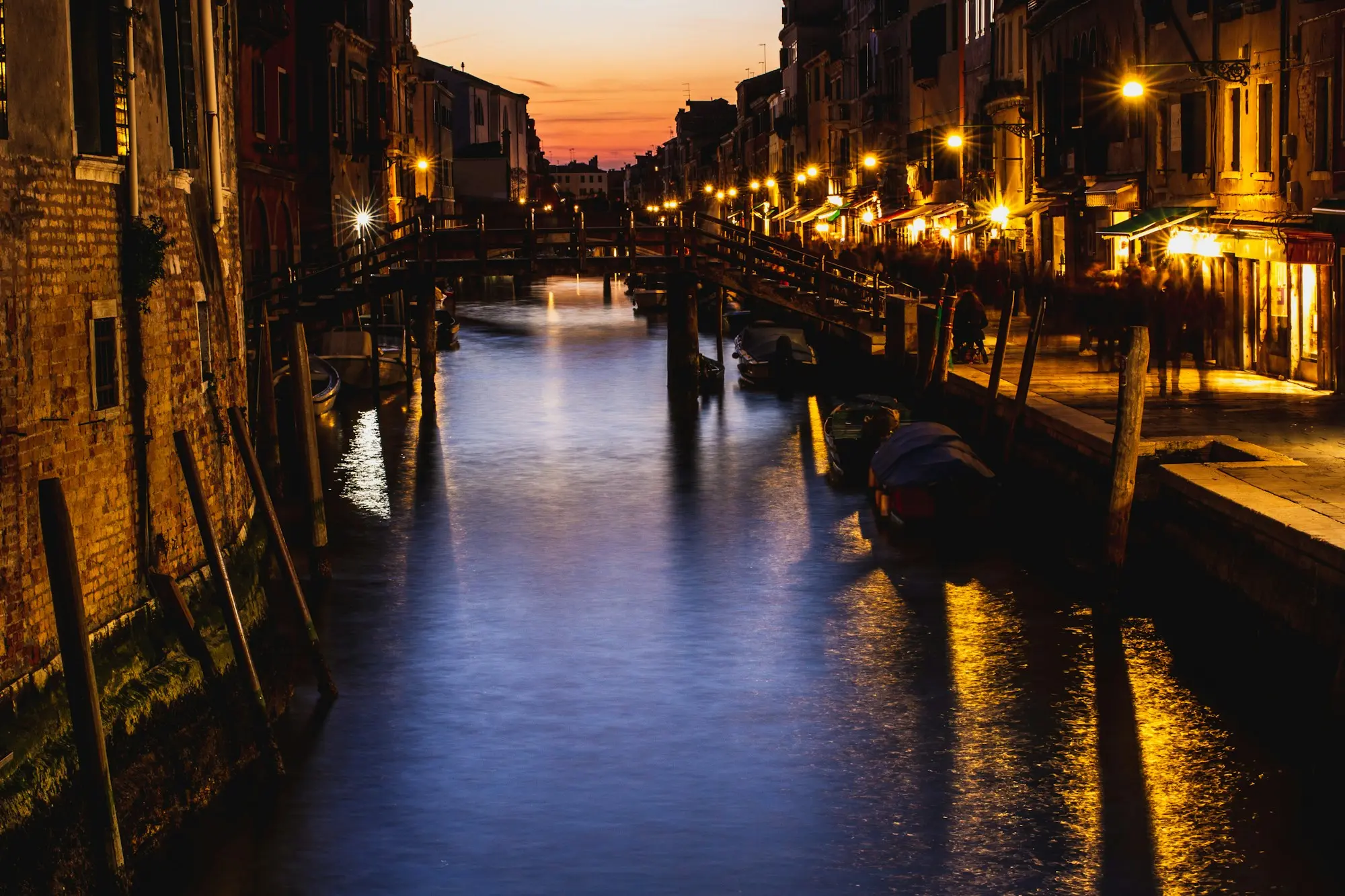
A gondola at dusk
The quiet side canals in the last half hour of light.
Best time to goApril to June and September to October
Venice, planned from India
Two nights at minimum, three for the lagoon; and always stay in Venice itself rather than visiting from the mainland.
Flights from India
Air India flies nonstop from Delhi to Milan Malpensa in about eight and a half to nine hours. From Mumbai, Bengaluru, Hyderabad and Chennai, one-stop routes through Dubai, Doha or Abu Dhabi on Emirates, Qatar Airways or Etihad take eleven to thirteen hours. Italy needs a Schengen visa for Indian passport holders; apply 45 to 60 days ahead in peak season, and we send the hotel confirmations and day plan the appointment asks for.
Where we'd stay
The Gritti Palace for the Grand Canal itself. Aman Venice for a quieter palazzo with a private garden. Belmond Hotel Cipriani on Giudecca, open in the warmer months, for a pool and a view back across to San Marco.
Getting there and around
Fly into Venice Marco Polo, usually via a Gulf or European hub, or take the fast train from Milan, Florence or Rome to Santa Lucia station on the Grand Canal. In the city we use private water taxis and walk; there are no cars.
High water
Flooding, acqua alta, is most likely from October to December. The MOSE barriers, in use since 2020, now hold back most high tides, and hotels provide boots when needed.
Vegetarian & Jain food
Italy is one of the easiest countries in Europe for vegetarians: pasta, risotto, pizza, burrata and grilled vegetables are on every menu. The catches are fish (some Italians assume vegetarians eat it), meat stock in soups and animal rennet in some cheeses. Jain meals are harder, because onion and garlic sit under most sauces, so we brief restaurants in writing before you arrive.
How a few days might unfold
A starting point, not a package — every day is shaped around you.
Arrival by water
A private water taxi from Marco Polo airport or the station straight to your hotel's landing, and dinner nearby.
San Marco early
St Mark's Square before nine, the Doge's Palace with a private guide, and a private gondola at dusk.
The lagoon
A private boat to Murano, Burano and Torcello, with lunch on the water and back for the evening.
Onward
Florence is about two hours by fast train, Milan about two and a half, and the Dolomites a scenic drive away.
Experiences in Venice
A Italy honeymoon, designed for two
Lake Como, Venice and Florence, then the Tuscan hills and Positano.
Questions, Answered
How many days do you need in Venice?
Two nights is the minimum to see Venice at its quiet hours; three lets you add Murano, Burano and Torcello by private boat.
Do we have to pay the Venice access fee?
The fee applies to day visitors on peak days. Guests staying overnight in Venice are exempt, and your hotel handles the registration.
Is Venice flooded in winter?
High water is most likely from October to December, but the MOSE barriers now protect the city from most high tides. Winter Venice is quiet and atmospheric.
Is Venice good for a honeymoon?
Yes, especially paired with Lake Como or Florence. In December and January, when the lake and coast hotels close, Venice is one of the most romantic cities in Europe.
Can we take a gondola privately?
Every gondola we book is private, for the two of you, timed for dusk and routed through the quiet side canals.