Cape Town
Where mountain meets two oceans
Tell us when — we'll design the rest
Leave your details and a travel designer will call within 24 hours. We do the research, you choose — no packages, no long forms.
Cape Town is a city under a flat-topped mountain, with the Atlantic at its feet, the Winelands an hour inland and some of the best restaurants in the southern hemisphere. From India it is one connection through Dubai or Doha, and we plan four nights in the city before the vineyards and a private safari.
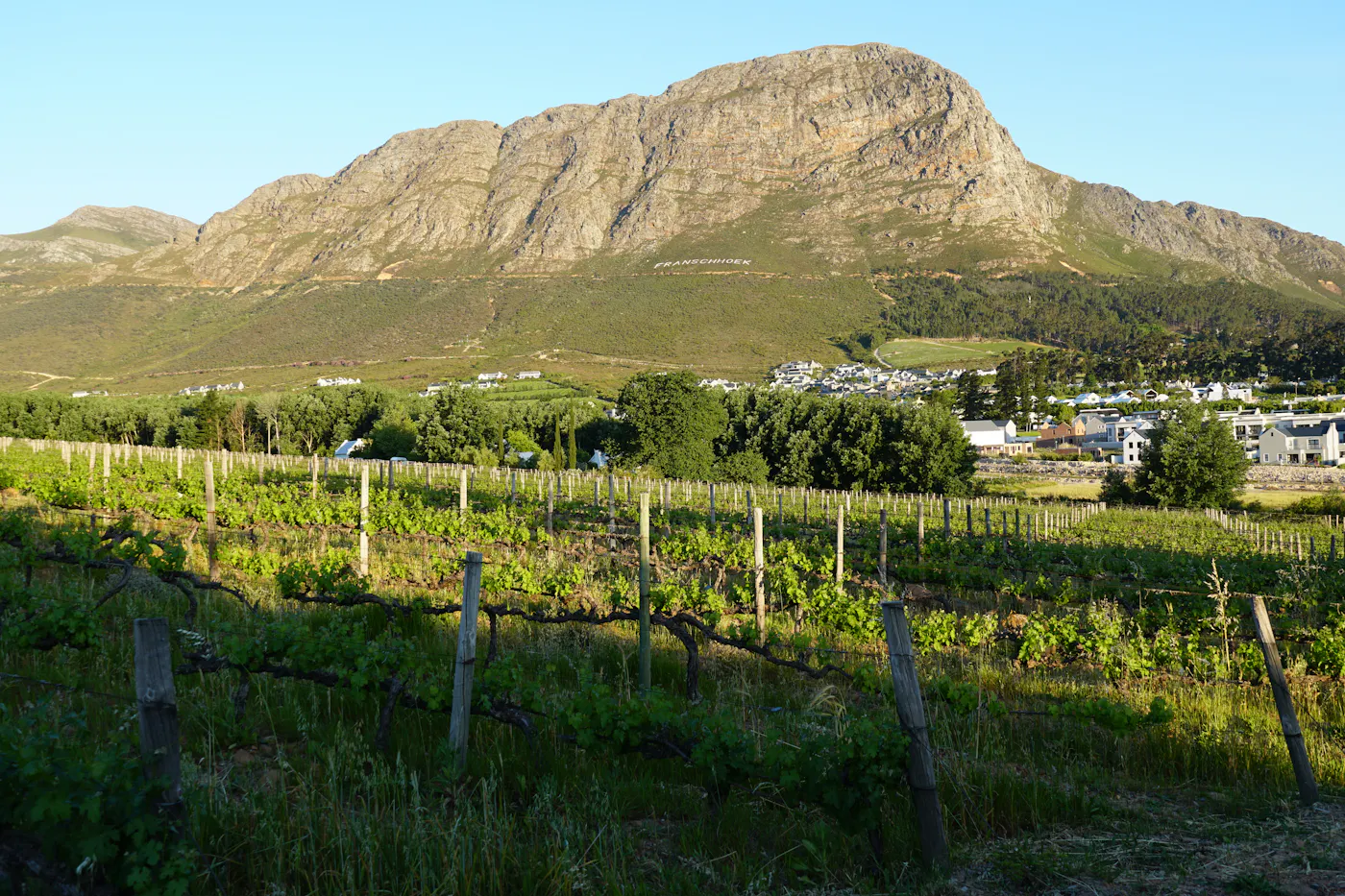
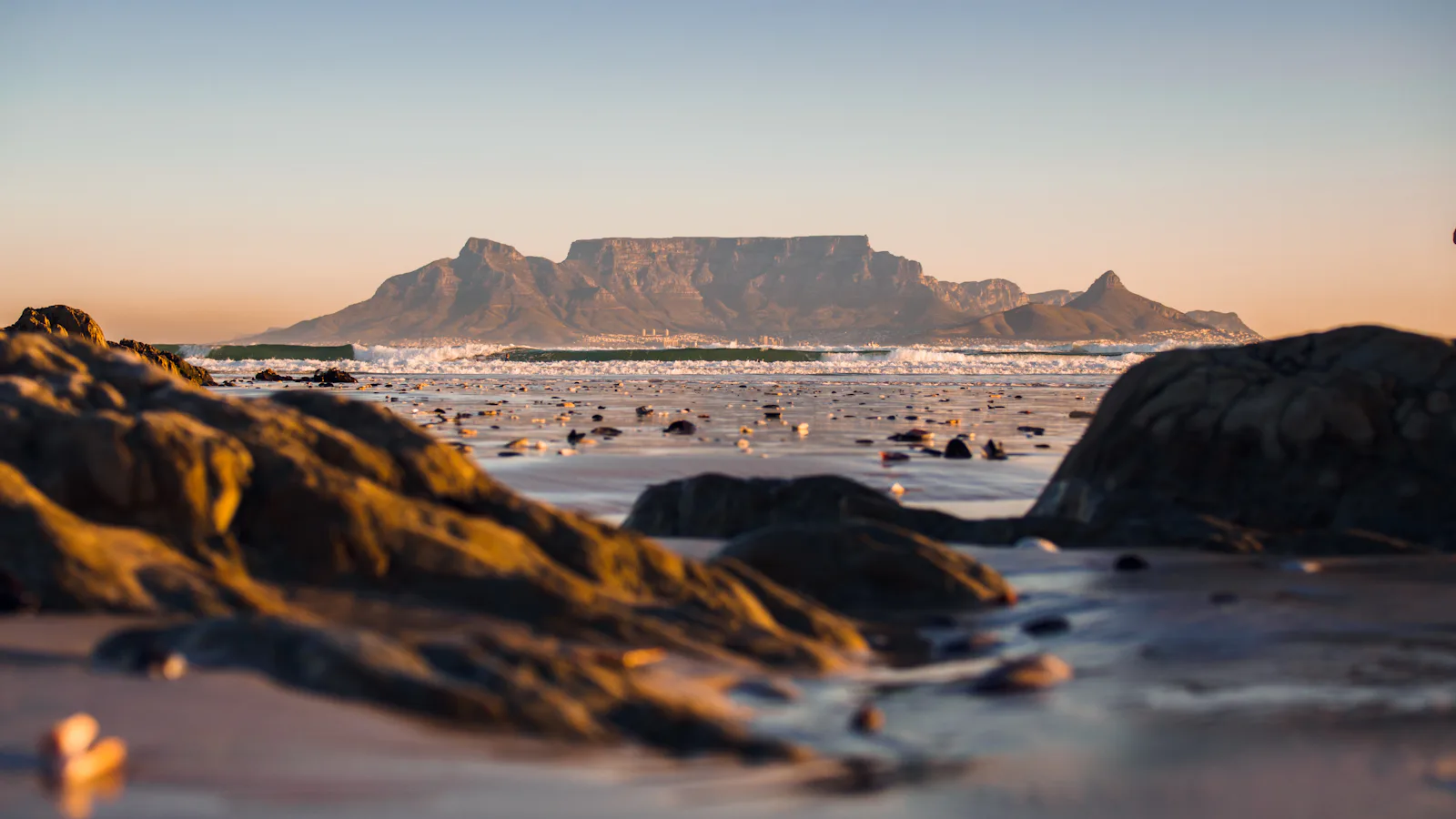
Cape Town is the city most of our clients fall for before the plane has landed: Table Mountain over the bay, Bo-Kaap's painted streets, Atlantic beaches with water too cold to swim in and too beautiful to leave. The classic mistake is two nights. Cape Town deserves four: one for the mountain, one for the peninsula drive to Cape Point, one for the restaurants, and one kept free, because the wind and cloud on Table Mountain decide their own days and we always want a spare. We base you on the Atlantic side or at the V&A Waterfront, and plan the mountain for the first clear morning rather than a fixed date. Then the Cape Winelands. Franschhoek is 1h15m by car, and we give it two or three nights, not a day trip, because the valley's best tables and cellars are an evening's pleasure. In July to November, add Hermanus on Walker Bay, where southern right whales calve within sight of the cliffs. Most journeys then fly on to the private reserves of the Greater Kruger. We put the safari last: the city and the vines first, and the trip ends on its most dramatic note.
Table Mountain before the crowds
Up by the first cable car, its floor turning slowly so the whole bay passes the window, or on foot through Platteklip Gorge with a private guide. The city is still waking and the Atlantic lies flat to the horizon. By the time the queues form, you are at breakfast.
The Cape Point drive
Chapman's Peak, carved into the cliff above the Atlantic, then the African penguins of Boulders Beach waddling between granite boulders, then the wind-whipped headland of Cape Point. A private driver, lunch at a fishing harbour, and nobody else's schedule.
A cellar in Franschhoek
A tasting with the winemaker, pouring from barrels that will not be bottled for another year or two, under Cape Dutch gables and oak trees. Then dinner with the mountains going purple outside the window, and a car to take you home.
Art at the Silo
Zeitz MOCAA, the museum of contemporary African art, is carved into the concrete tubes of a 1920s grain silo at the V&A Waterfront. A private curator's walk before opening, then the six floors of the Silo Hotel above, with art in every one of its 28 rooms.
Best time to goNovember to March brings the Cape's warmest, sunniest weather, and September to November adds spring flowers and whales at Hermanus; avoid mid-December to mid-January, when South African school holidays fill the best hotels and many enforce minimum stays.
Cape Town, planned from India
Two nights is the classic mistake; Cape Town needs four, one of them left empty for the mountain's weather, before the Winelands and the bush.
Flights from India
There is no nonstop flight between India and South Africa. Emirates through Dubai offers the widest choice of Indian cities into Cape Town; Qatar Airways through Doha is our pick for a flat bed on honeymoons; Ethiopian Airlines through Addis Ababa is often the shortest journey. Expect thirteen to seventeen hours in total. We usually fly you into Cape Town and home from Johannesburg.
Getting there
Cape Town International is about twenty minutes from the city. Franschhoek is 1h15m by private car and Hermanus about 1h30m. Johannesburg is around two hours by air, with short connections into the Greater Kruger, where light aircraft land at the lodges' own airstrips. We never ask clients to self-drive; every transfer is with a private driver.
Where we'd stay
Ellerman House, an Edwardian mansion on the Bantry Bay cliffs with a serious private art collection and Atlantic sunsets. The Silo Hotel, 28 rooms above Zeitz MOCAA at the Waterfront. Cape Grace, reopened in 2024 under Fairmont after a full renovation, for families who want space by the harbour. In Franschhoek, La Residence, a romantic farmhouse of eleven suites on a working vineyard.
Vegetarian & Jain food
Vegetarian food is very good: Cape Town has one of the most developed plant-based scenes in the southern hemisphere, and La Colombe runs a full vegetarian tasting menu. Cape Malay curries and South Africa's long-established Indian community give the food real warmth. Jain meals are workable at the hotels and lodges we book, which cook to the written brief we send ahead.
How a few days might unfold
A starting point, not a package — every day is shaped around you.
Arrival on the Atlantic
Land through Dubai or Doha, settle into a suite on the Atlantic seaboard or the Waterfront, and take the first evening for sundowners as the light falls on Lion's Head.
The mountain and the city
Table Mountain on the first clear morning, then Bo-Kaap and its Cape Malay kitchens, Kirstenbosch's gardens on the mountain's eastern slope, and dinner in the city.
The peninsula
Chapman's Peak, the penguins at Boulders Beach, Cape Point and lunch by the sea at a fishing harbour, back along False Bay in the afternoon light.
Constantia and the free day
A day kept free for the weather to choose, or lunch at La Colombe on the Silvermist estate in Constantia, among the oldest wine country in the Cape.
Into the Winelands
An hour and a quarter by private car to Franschhoek for two or three nights of cellars and long lunches, or a flight to the Greater Kruger for the safari.
Experiences in Cape Town
Real itineraries through Cape Town
Questions, Answered
How many days in Cape Town are enough?
Four nights in the city, then two or three in Franschhoek. Table Mountain closes in high wind or cloud, so we keep one day free for the weather. Two nights, the usual mistake, leaves you choosing between the mountain and the peninsula.
What is the best time to visit Cape Town from India?
November to March for warm, dry weather and long evenings; September to November for spring, wildflowers and the whales of Walker Bay. June to August is the Cape's wet, windy winter, though it is the best season on safari, so we shift the balance of nights to the month.
Are there direct flights from India to Cape Town?
Not yet. Every routing connects once. We use Emirates through Dubai, Qatar Airways through Doha, or Ethiopian Airlines through Addis Ababa when total time matters most. Plan on about thirteen to seventeen hours in all, and we fly you out of Johannesburg after the safari.
Can we combine Cape Town with a safari?
Yes, and we recommend it. Our classic shape is four nights in Cape Town, two in Franschhoek and four in a private reserve in the Sabi Sand, which borders the Kruger. For families with young children, we choose a malaria-free reserve such as Madikwe instead.
Is Cape Town good for a honeymoon or a family trip?
Both. Couples get Atlantic sunsets, vineyard suites and one of the best restaurant scenes in the southern hemisphere. Families get penguins, the cable car and short drives. We plan the city carefully, with private drivers door to door after dark and hotels chosen for their location.